
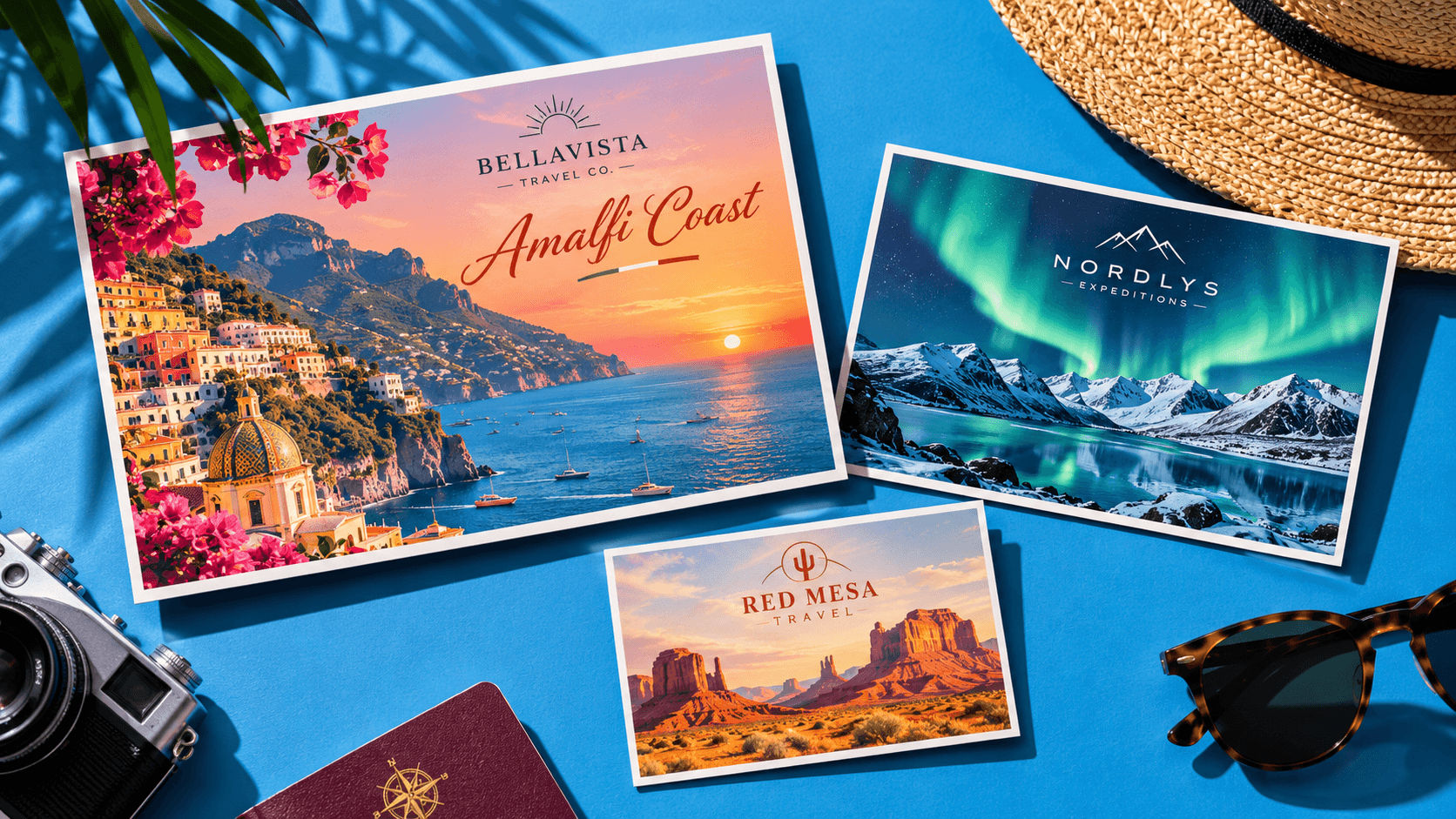
Quick answer: 4" x 6" is the classic postcard and the most economical to produce; 5" x 7" gives design room for promotions and invitations; 6" x 9" is the jumbo format that dominates a mailbox. All are available across our postcard range with instant pricing.
Sizes we print, and when to use them
- 4" x 6" — the standard. Compact, familiar, budget-friendly for high-volume drops. A strong default for coupons and appointment reminders.
- 4.25" x 5.5" — quarter-page size; neat for handouts and enclosure cards.
- 4" x 4" — square format that stands out in the mail and doubles as packaging inserts (note: USPS treats square mail differently — see below).
- 5" x 7" — the invitation size; comfortable space for imagery plus an offer.
- 4" x 8.5" and 3.5" x 8.5" — slim "rack" proportions; great for menus-by-mail, price lists and door-drop pieces.
- 4" x 9" — matches a #10 envelope face; pairs well with envelope campaigns.
- 6" x 9" and 6.5" x 9" — jumbo cards with room for product photos, maps and multi-offer layouts; the highest-impact mailer format we print.
USPS rules worth knowing (US mailings)
To mail at the postcard rate, USPS requires a card between 3.5" x 5" and 4.25" x 6" and within thickness limits — of our lineup, 4" x 6" and 4.25" x 5.5" qualify. Larger cards (5" x 7", 6" x 9") mail as letter-rate pieces, and square cards are charged a nonmachinable surcharge. Verify current rates with USPS before a large drop; postal pricing changes.
File setup
Add 0.125" bleed to the finished size (a 4" x 6" card is built at 4.25" x 6.25"), keep text 0.125" inside trim, and supply 300 DPI CMYK artwork — the full spec is in our bleed guide and resolution guide. Direct-mail creative tips live in Direct Mail That Gets Opened.
Stock and finish
The same size ships very differently on different stocks — from economical 14pt and sturdy 16pt/18pt to premium silk, suede and raised spot UV. Configure size, stock and quantity on the postcards category for live pricing with a free digital proof.